How to Read a Dog Food Label: Protein, Fat, Ingredients, and Feeding Guidance
Learn how to read dog-food labels, compare ingredients and guaranteed analysis, and choose a formula that fits your dog’s needs.
How to Read a Dog Food Label: Protein, Fat, Ingredients, and Feeding Guidance
Dog-food labels help owners compare foods using information beyond front-of-bag marketing. Reviewing the ingredient list, guaranteed analysis, nutritional adequacy statement, and feeding directions can help you choose a food that fits your dog’s life stage, body condition, activity level, and individual needs.
The Ingredient List
Ingredients on a dog-food label are generally listed by weight before processing. Reviewing the first several ingredients can help you understand the food’s ingredient approach. Look for clearly identified ingredients and review the complete ingredient list, especially if your dog has ingredients you prefer to include or avoid.
Named Animal-Protein Ingredients
A named animal-protein ingredient identifies a specific source, such as chicken, beef, lamb, or salmon. This can make it easier to understand the ingredient list and compare products. Ingredient lists should be considered alongside the guaranteed analysis, nutritional adequacy statement, feeding directions, and your dog’s individual needs.
Guaranteed Analysis
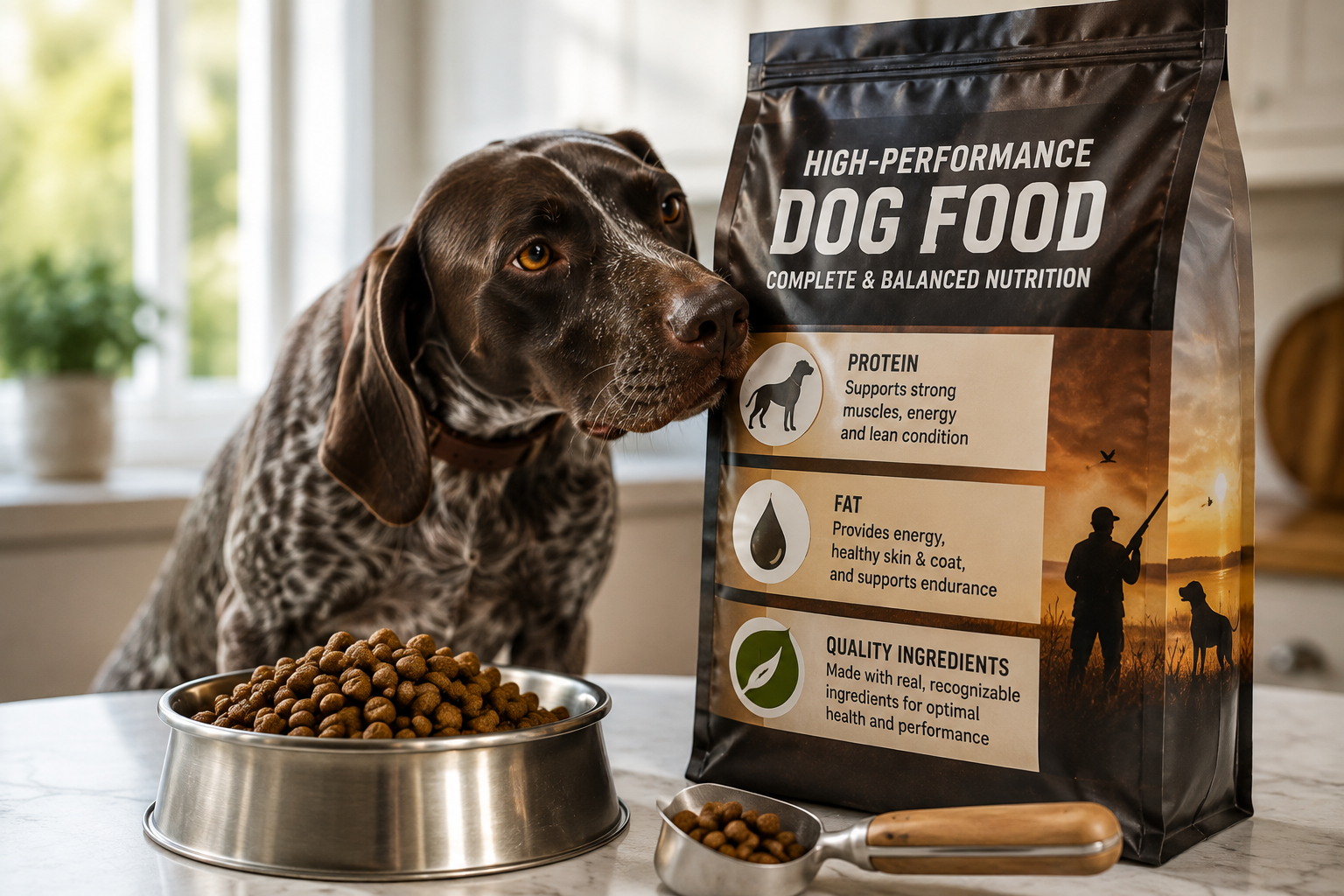
The guaranteed analysis lists minimum percentages for crude protein and crude fat, along with maximum percentages for crude fiber and moisture. These values can help you compare formulas, although they are only one part of the complete label.
A dog’s appropriate protein and fat profile depends on factors such as life stage, body condition, activity level, workload, and individual tolerance.
Nutritional Adequacy Statement
The nutritional adequacy statement identifies whether a product is formulated to meet an established nutrient profile or has been substantiated through feeding trials. It also identifies the intended life stage or life stages.
Review this statement to make sure the food is appropriate for your dog’s stage of life. Consult your veterinarian if you have questions about individual feeding or nutritional needs.
Feeding Directions
Feeding directions provide a starting point based on a dog’s weight and activity level. Monitor your dog’s body condition and adjust portions when appropriate. The Outlaw Feed Feeding Guide provides starting points by dog weight and activity level.
Comparing Gold Formula and Blue Formula
Outlaw Feed offers two formulas with different guaranteed-analysis profiles:
- Gold Formula: 26% protein and 18% fat; marketed for working, hunting, and active dogs.
- Blue Formula: 21% protein and 15% fat; marketed for adult dogs and everyday nutrition. Compare product labels alongside your dog’s age, body condition, activity level, workload, and individual needs. For individualized guidance, consult your veterinarian.
Outlaw Feed’s Ingredient Approach
Outlaw Feed is manufactured in Bell County, Texas. The company states that its formulas contain no corn, wheat, or soy and list real, named meat as the first ingredient.
Learn more on the Why Outlaw Feed and Ingredients pages.
Consider Your Dog’s Individual Needs
No single formula fits every dog. Consider your dog’s life stage, body condition, activity level, daily routine, and individual tolerance when reviewing food options. For dogs in Belton and nearby communities, use the Belton store locator to find a local retailer. Formula availability can change, so contact the retailer before visiting.